Bowel & Bladder Dysfunction Treatment in New York
Urgency, leakage, and constipation are common, but they are not something you have to accept as normal. Pelvic floor physical therapy retrains the muscles that control bowel and bladder function so you can move through your day with confidence.
What causes Bowel & Bladder Dysfunction?
Bowel and bladder dysfunction is rarely just "in your head" or something to tough out. It usually traces back to pelvic floor muscles that are too weak, too tight, or not coordinating properly with the rest of your core. Leaking with a cough, rushing to the bathroom the moment you feel the urge, or straining that never quite resolves are common symptoms, not something you have to plan your life around. Pregnancy, surgery, chronic straining, and even posture all play a role, and each has a specific path back to normal function.
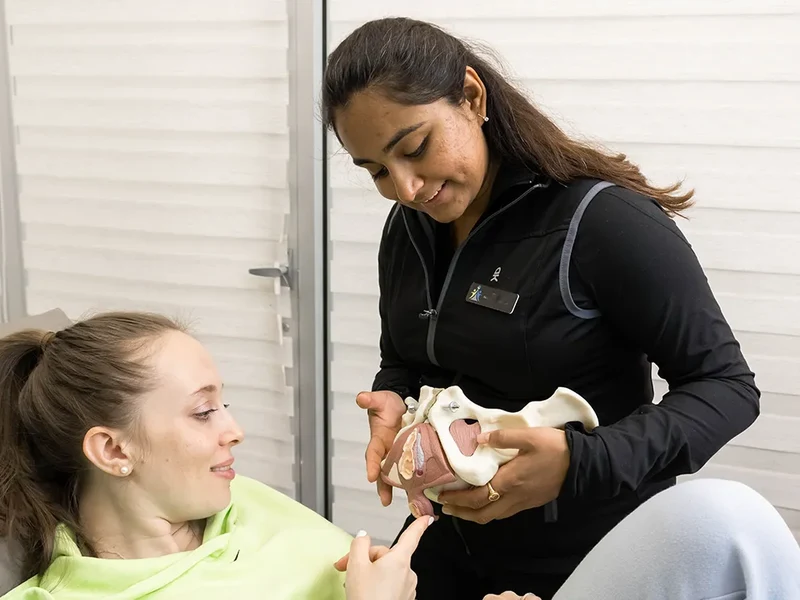
The pelvic floor is a muscular sling that supports bladder and bowel control. When it is weak or fires at the wrong time, urgency and leakage follow. Some patients have a pelvic floor that is not weak at all but overly tight, which can produce the same urgency and incomplete-emptying symptoms as a weak one. Targeted retraining teaches these muscles to contract and relax on cue again, instead of guessing at generic exercises that may make a tight pelvic floor worse.
Carrying and delivering a baby stretches and strains the pelvic floor, sometimes leaving lasting weakness, nerve stretch, or scar tissue from tearing or an episiotomy. A vaginal delivery and a cesarean section both change the demands on these muscles, just in different ways. Postpartum bodies need dedicated rehab, not just time, to fully restore control.
Repeated straining on the toilet increases pressure on the pelvic floor and can worsen both bowel and bladder symptoms over time. Poor toileting posture, such as sitting fully upright instead of using a footstool to open the pelvic outlet, makes that straining harder than it needs to be. Better mechanics and toileting habits reduce that strain significantly.
Bladder and bowel control depend on clear signaling between your brain, nerves, and pelvic muscles. When that coordination breaks down, symptoms like urgency or incomplete emptying appear even when the muscles themselves are not weak. Rushing to the bathroom the moment you unlock your front door, a pattern many people recognize instantly, is a classic sign of this kind of miscommunication rather than a true bladder problem.
Pelvic or abdominal surgery, as well as hormonal shifts from menopause, can change the support structures around the bladder and bowel. Reduced estrogen after menopause thins the tissue that helps seal the urethra, which is why new leakage symptoms sometimes show up for the first time in a woman's fifties. Rehab rebuilds strength and control around those changes.

How physical therapy in New York helps.
Pelvic floor physical therapy starts with understanding exactly which muscles are underperforming and which are overactive, since both can cause similar symptoms. We use hands-on assessment, biofeedback, and targeted exercise to retrain the pelvic floor to contract, relax, and coordinate properly with your breathing and core. Alongside muscle work, we address bladder and bowel habits, including timing, positioning, and diet factors that make symptoms worse. This is private, one-on-one care that treats the root cause rather than managing symptoms indefinitely. Most patients see meaningful improvement in urgency, leakage, and constipation within a focused course of care, with a home program that keeps progress going between visits. Every evaluation happens in a private treatment room with the same therapist each visit, which matters given how personal these conversations can feel. We would rather spend the first appointment asking real questions about your symptoms and daily habits than hand you a generic sheet of pelvic floor exercises that may not even fit your specific pattern.
What to expect from your recovery.
Evaluation and symptom mapping
Your first visit is a private, detailed conversation about your symptoms, followed by an assessment of pelvic floor strength and coordination. We ask about timing, triggers, and daily habits that may be contributing, then build a plan specific to what we find rather than a generic exercise sheet.
Targeted retraining and biofeedback
Using hands-on techniques and biofeedback, we retrain the pelvic floor to contract and relax appropriately, reducing urgency, leakage, and straining. We also work through toileting mechanics and habits, since how you sit and breathe on the toilet matters as much as the muscles themselves.
Long-term habit and strength maintenance
We finish with a home program covering strength, habits, and self-management so your progress holds long after therapy ends. You leave knowing exactly what to do if symptoms flare in the future, instead of starting from scratch.
I came here 4 months post baby and my recovery would not have been possible without working with Dr. Monica. I was still very much struggling with pain throughout my body and she made me feel seen and heard throughout the process. It took me over 30 minutes to walk to her office the first day and only 10 minutes the last day, which made me feel like my old self again.
Pain rarely travels alone.
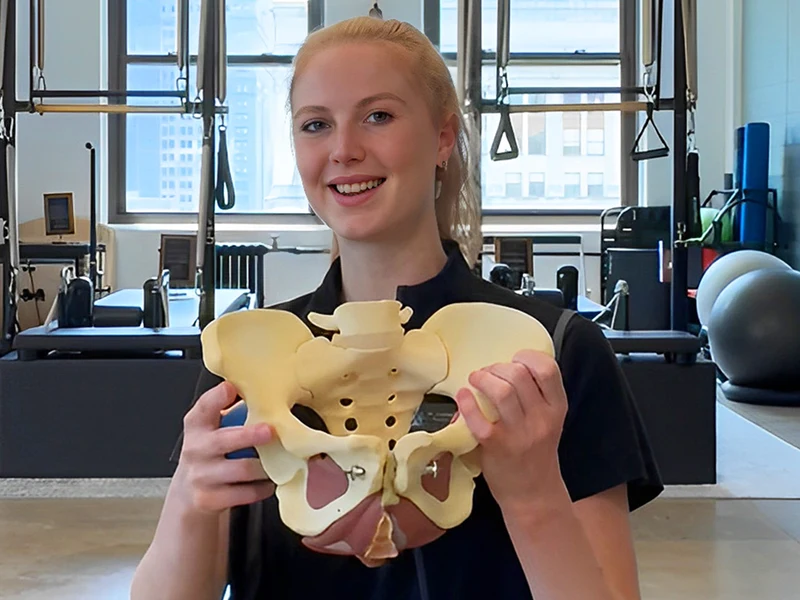
Postpartum Recovery
Pregnancy and delivery change your core and pelvic floor. We help you recover fully, not just partially.
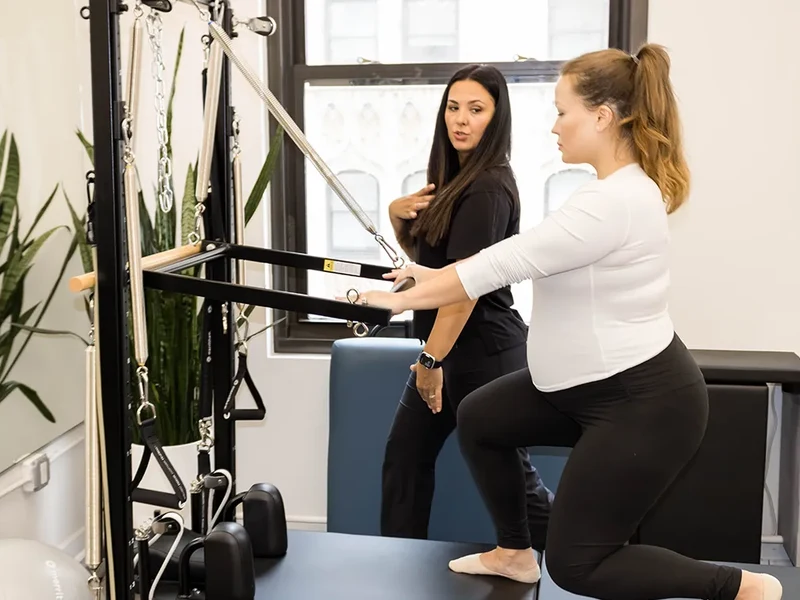
Return to Exercise Postpartum
Getting back to workouts after baby takes a rebuilt foundation. We help you return safely.
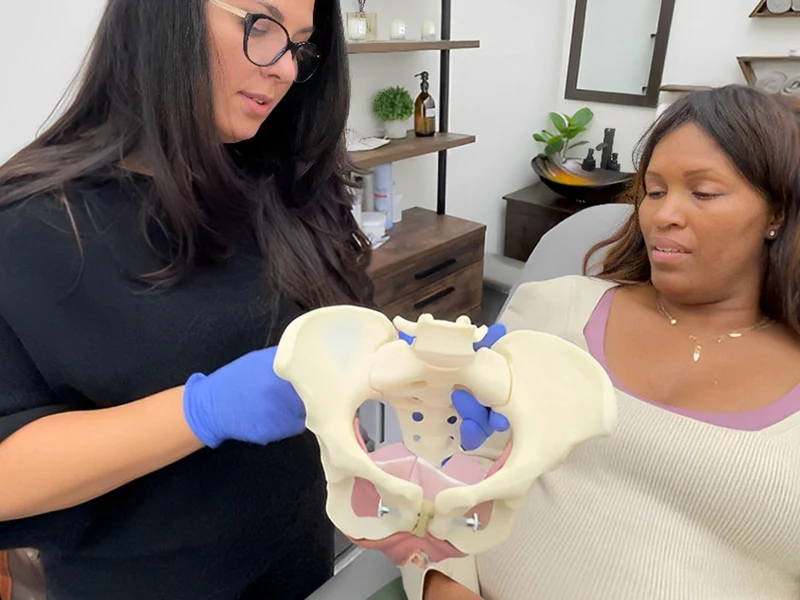
Running Postpartum
Running postpartum puts real demand on the pelvic floor. We prepare your body for the miles.